
http://im.rediff.com/money/2023/jul/20uv.jpg

Last month, hiring trends were most bullish in the IT and auto sectors. Telecom and banking segments also saw improving recruitment activities.

The spike in food prices at the onset of the monsoon season has corroborated the Reserve Bank of India's (RBI's) view that the fight against inflation is far from over, the State of the Economy report of the central bank said. At the same time, the report said that the country is poised to become the fastest-growing major economy in the world, notwithstanding some sequential moderation in economic activity in June. Consumer Price Index (CPI)-based inflation rate increased to 4.8 per cent in June 2023, from 4.3 per cent in May, primarily on account of an increase in food inflation.
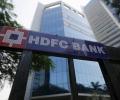
The country's most valuable lender HDFC Bank can perhaps no longer claim to be a favourite of foreign portfolio investors (FPIs). Two data indicators, both somewhat interconnected, point to this - the diminishing premium of HDFC Bank's American depositary receipts (ADRs) compared to local shares, and the ample investment opportunities available to FPIs in the domestic market. The ADR premium has shrunk to below 5 per cent, down from over 30 per cent in March 2021, and even lower than recent levels.

The domestic equity market, which is on a record-breaking spree, will focus on macroeconomic data announcements, movement in global stocks and the US Fed minutes to get further direction, analysts said. Trading activity of Foreign Institutional Investors (FIIs) will also innfluence investors.From the domestic macroeconomic front, Purchasing Managers' Index (PMI) data for the manufacturing sector will be released on Monday, and that o,f the services sector on Wednesday. Investors, this week, will keenly watch major global market events, icluding the outcome of the Federal Open Market Committee (FOMC) minutes, scheduled to be out on Wednesday.

Textile stocks have exhibited a mixed performance so far this calendar year (CY23), amidst higher domestic cotton prices and tepid global demand. Shares of Page Industries, Dollar Industries, Lux Industries, and VIP Clothing have declined up to 13 per cent so far in CY23, as against a 9 per cent jump in the S&P BSE Sensex. On the contrary, shares of Arvind, Welspun India, Raymond, and Gokaldas Exports have gained up to 51 per cent, during the same period.

The festive season will mean business for the steel industry as it is the time when automotive and consumer appliance companies bump up demand to prepare for higher sales, experts have said. Ranjan Dhar, chief marketing officer at ArcelorMittal Nippon Steel India (AM/NS India), said that bookings by auto and consumer appliance industries are 20 per cent higher ahead of the festive season compared to last year. "While this could be for a couple of months, it could normalise later at approximately 10 per cent," he said.

'If individual stocks start falling 25% to 30% or more, then I doubt how many of them will be able to withstand that (kind of selloff). That is when you'll see panic coming in.'

The US-based company, in collaboration with partners like Wistron and Foxconn, had recently started assembling iPhone 11 in India.

The Reserve Bank on Wednesday projected retail inflation to ease to 5.3 per cent in next fiscal from 6.5 per cent this year on assumptions of lower imported inflation, even though core inflation remains sticky. The RBI's inflation outlook for current fiscal has improved from 6.8 per cent projected earlier, to 6.5 per cent, on the back of steeper than expected decline in vegetable prices and Indian basket of crude at $95 a barrel. "Looking ahead, while inflation is expected to moderate in 2023-24, it is likely to rule above the 4 per cent target.

India's economic growth will be above 6 per cent in the current fiscal as the country has managed to strengthen its macroeconomic stability and performance even in a period of large global shocks, RBI Monetary Policy Committee (MPC) Member Ashima Goyal said on Monday. Goyal further said that a global slowdown reducing India's export growth, geopolitics fueling oil and food prices, and erratic weather are some of the continuing risks that the country faces. "India has managed to strengthen its macroeconomic stability and performance even in a period of large global shocks.

The COVID-19 pandemic and the ensuing lockdown may have put the best of funds on a backfoot of deal activity, RIL, however, has been an outlier. With 10 different investors brought in for its telecom venture Jio Platforms, RIL undertook 12 different transactions since April this year.

Cement companies posted mixed figures for the first quarter of the 2023-24 financial year (Q1FY24). Volume growth was robust at 17 per cent year-on-year (Y-o-Y) - on an aggregate basis - for 15 cement companies, with revenue growth at 15 per cent. Aggregate earnings before interest, taxes, depreciation, and amortisation (Ebitda) were up 8.8 per cent Y-o-Y and 1.2 per cent quarter-on-quarter (Q-o-Q).

Reserve Bank of India (RBI) on Wednesday upped inflation projection for the current fiscal to 6.7 per cent from 5.7 per cent forecast in April. RBI Governor Shaktikanta Das said the upside risk to inflation persists and the recent spike in tomato prices would fuel food inflation. Also, high global crude oil prices would add to the upside pressure on inflation. The upward revision in inflation projection comes as domestic retail inflation has remained above RBI's comfort level of 6 per cent for four months in a row, mainly due to the Russia-Ukraine war which has impacted the prices of commodities across the globe.

Fuel retailers sell diesel, domestic LPG and kerosene at government controlled rates which are below market price. The loss they thus incur is made good through cash subsidy from the government and dole from upstream firms like Oil and Natural Gas Corporation.


Stocks of defence-related companies have been firing on all cylinders on the bourses in calendar year 2023 (CY23). Shares of Hindustan Aeronautics (HAL), Bharat Electronics (BEL), Bharat Dynamics (BDL), Data Patterns, MTAR Tech, Cochin Shipyard and GRSE have rallied in the range of 21-96 per cent so far this year. By comparison, the BSE Sensex is up 8 per cent. The gains have been sustained on the back of robust export opportunities, a healthy project pipeline and the government's continued push for local manufacturing and indigenisation of defence equipment.

Even as cyber threats continue to rise in India - the second-largest global active internet user base - the country is currently facing a big skill gap in the cybersecurity domain and represents just six per cent of global cybersecurity jobs, finds a report. As of May 2023, the industry had about 40,000 open opportunities, indicating the growing demand for skilled cybersecurity professionals. However, the demand-supply gap stood at 30 per cent, projecting a major skill challenge in the industry, finds the study by tech staffing firm TeamLease.

The Reserve Bank of India on Thursday opted for a pause second time in a row, maintaining key benchmark policy rate at 6.5 per cent as inflation moderates. The rate increase cycle was paused in April after six consecutive rate hikes aggregating to 250 basis points since May 2022. Announcing the bi-monthly monetary policy, RBI Governor Shaktikanta Das said the Monetary Policy Committee (MPC) unanimously decided to keep the rate unchanged at 6.5 per cent.


The Indian equity market has been dancing to the tune of foreign portfolio investors (FPIs) for more than two decades now. Typically, when FPIs are net-buyers on Dalal Street (D-Street) and raise their ownership of Indian equities, the broader market rallies. Conversely, when FPIs turn net-sellers, the stock prices decline. FPIs have been net-sellers on D-Street for five quarters on the trot and the result has been predictable.

The new CEO's next challenge is to grow margins.

India witnessed 22 initial public offers worth over $2.5 billion in the first three months of 2021 amid "high momentum" in the country's capital markets and the trend is likely to stay bullish in the current quarter also, according to a report. Leading consultancy EY India's IPO (Initial Public Offer) report released on Wednesday showed that consumer products and retail, diversified industrial products, automotive and transportation were the most active sectors in terms of the number of IPOs in the 2021 first quarter. The IPOs include both in the main as well as SME (Small and Medium Enterprise) markets.

Similar discounts compared to online led to a spike in demand for offline, where customers can get a more personal and hands-on product experience.

The appraisals being done by most companies this year are harsher than past ones with higher threshold in many metrics. Reduction in headcount has been done across most tier-I and tier-II IT firms along with global technology firms in the country.

After the second wave of the pandemic, general and health insurers have seen a fall in their outgo of Covid-related health claims. In the July-September quarter (Q2 of FY22), insurers settled a little over Rs 5,000 crore worth of Covid health claims. This is 35 per cent lower than the Rs 7,700 crore worth of claims they settled in Q1, sources said.

A slowdown in hiring by India's top IT companies has resulted in a sharp increase in the industry's profit per employee in Q3FY23. The top four IT companies earned a net profit of 1.7 lakh per employee during October-December 2022, up 8.6 per cent from Rs 1.57 lakh in Q2FY23 and 16.3 per cent from a record low of Rs 1.47 lakh in Q1FY23. Earnings per employee in the third quarter were, however, still down 0.9 per cent on a year-on-year (YoY) basis.

TCS CEO and MD Rajesh Gopinathan said the company believes the coronavirus impact has "bottomed out" and that TCS should now start tracing its path to growth.

Stocks of gold jewellery retailers have been able to retain their sheen in 2023 despite volatile gold prices. Kalyan Jewellers, Titan, PC Jewellers, Thangamayil Jewellery, and Tribhovandas Bhimji Zaveri (TBZ) have rallied 21-72 per cent so far since April as compared to a 13 per cent gain in the benchmark Sensex index. The rally gained steam on the back of gold's 6 per cen

'There is not one discussion with a client without a discussion around AI. They all have it on their mind.'

Sectors which attracted maximum foreign inflows during April-June 2019-20 include services (USD 2.8 billion), computer software and hardware (USD 2.24 billion), telecommunications (USD 4.22 billion), and trading (USD 1.13 billion), the commerce and industry ministry data showed.

After the hit of the pandemic, India Inc is now worried about the adverse impact of inflation and higher commodity prices on their revenues and margins. The inflation scare is the strongest among manufacturers of consumer goods such as automobiles, consumer durables, and fast-moving capital goods (FMCG). Companies across sectors fear they will not be able to pass on the hike in input costs to their consumers due to weak demand, which, in turn, would lead to a hit on margins and profitability in the forthcoming quarters.

Maruti's results and the investor response indicate that quite a few stocks in the auto sector could be on the verge of a big bounce, says Devangshu Datta.

Days after Moody's cut its gross domestic product (GDP) forecast for financial year 2022-23 (FY23) after the official GDP print for the June quarter came in lower than expectations, the global ratings agency said it would maintain its long-term sovereign debt credit rating and outlook on Asia's third-largest economy. "The credit profile of India reflects key strengths, including its large and diversified economy with high growth potential, a relatively strong external position, and a stable domestic financing base for government debt," Moody's said on Tuesday. "We do not expect rising challenges to the global economy, including the impact of the Russia-Ukraine military conflict, higher inflation, and the tightening financial conditions on the back of policy tightening, to derail India's ongoing recovery from the pandemic in 2022 and 2023," it said.

HDFC Bank, the country's largest private-sector lender, lost to competition wholesale loans of around Rs 50,000 crore after it increased interest rates in May, said Chief Financial Officer Srinivasan Vaidyanathan in an analyst call. "There were some customers who were offered lower rates by other market participants. "But we decided not to cut back on our rates," he said while addressing analysts after the announcement of the bank's Q1 earnings.

Though retail investors accounted for a larger number of outstanding shares of the NSE-listed companies at 15.29 per cent, the combined value of their holding was Rs 9.16 trillion. This was much lower than the value of holding of FPIs and DIIs.

Food delivery firm Zomato Ltd said on Wednesday most stores of its grocery unit Blinkit had resumed operations after being shut following protests by delivery partners. "Over the last few days we have made changes in the delivery partner payout structure with respect to the Blinkit business to address the needs of delivery partners, improve customer experience and reduce cancellation/ order rejection frauds by few delivery partners in the system. "Such changes are done from time to time, as needed," said the company in a letter to the BSE.

State Bank of India's earnings growth may turn lacklustre in the near-term, warn analysts. This, they said, could be due to margin compression and likely lower fee income over the next one year. "While the cost of deposits is repricing sharply across the system, there will be relatively lower yield expansion going ahead as most of the back-book has been repriced and there is a high competitive pressure on yields.

More people working in India's technology industry have lost their jobs in the first six months of 2023 than in the corresponding period in 2022.

The job market saw an uptrend in the March quarter (Q1), with job interviews increasing 13.71 per cent quarter-on-quarter (QoQ) to over 30 million, according to Apna.co, India's largest jobs and professional networking platform. It recorded a 42 per cent QoQ growth in its employer base. As a result of the second wave of Covid-19 last year, sectors such as healthcare, delivery, and e-commerce were booming while others had fairly low employment.
 © 2026 Rediff.com - Advertise with us - Disclaimer - Privacy Policy - Sitemap - Feedback - About us - Terms of use - Grievances